The Sticky Topic of Chi Sao
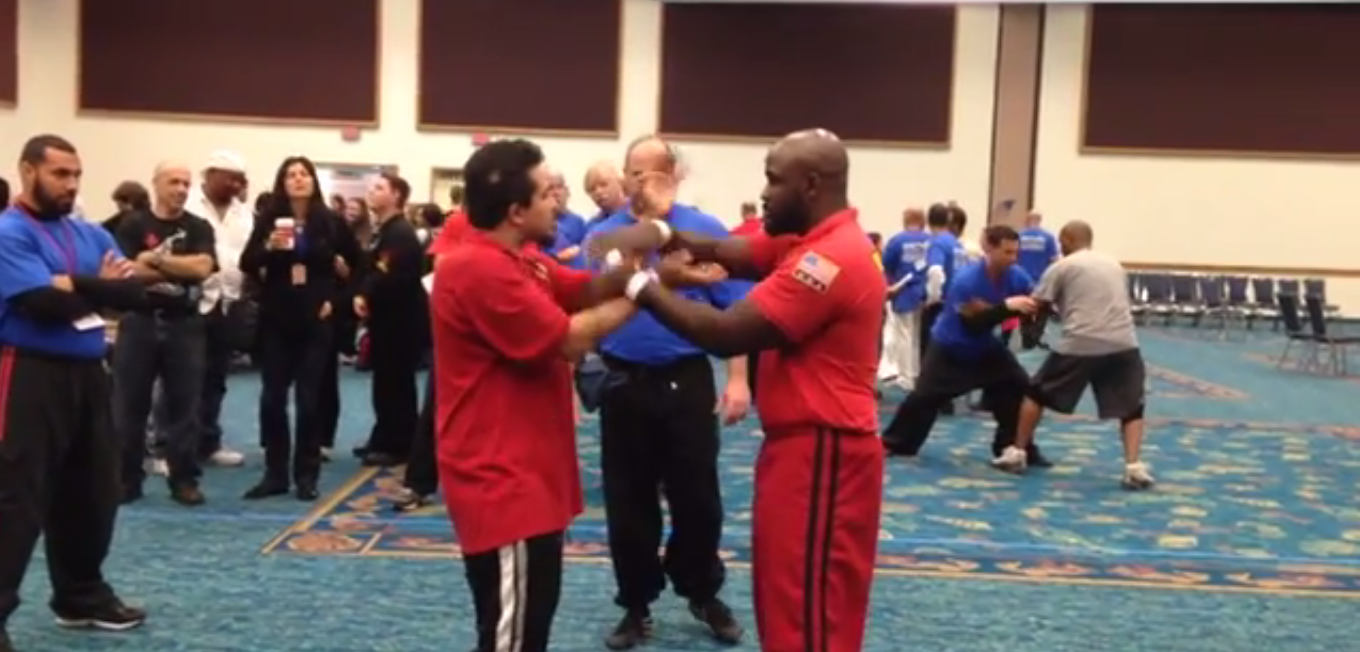
Chi Sao, often translated as “sticky hands,” is one of the most defining training methods in Wing Chun kung fu and a cornerstone of practical martial arts development. While many people associate fighting skill with speed or strength, Chi Sao develops something far more valuable: sensitivity, timing, and reflexive control. In a real self-defense situation, conflicts happen quickly and often at extremely close range. Chi Sao prepares practitioners for exactly that range, training them to respond instinctively rather than relying on slow, deliberate thought. By constantly maintaining contact with a training partner, students learn how to read pressure, intention, and movement before an attack fully develops.
Chi Sao is one of the most important sensitivity drills in Wing Chun kung fu and a vital component of martial arts training for practical self-defense. By maintaining constant contact with a partner, practitioners develop reflexes, timing, and pressure awareness that cannot be learned through forms alone. This training allows martial artists to respond instinctively in close-range encounters, which is where most real self-defense situations occur.
One of the most important benefits of Chi Sao is the development of tactile sensitivity. Unlike other martial arts training methods that rely heavily on visual cues, Wing Chun teaches practitioners to “feel” an opponent’s movement through contact. This sensitivity allows a practitioner to detect changes in force, direction, and balance the moment they occur. In a real self-defense encounter, lighting, distance, and chaos can make visual reactions unreliable. Chi Sao conditions the nervous system to react through touch, giving kung fu practitioners a powerful advantage when seconds matter.
“In Wing Chun, defense and attack are not separate actions — they occur simultaneously.”
Structure
Chi Sao also reinforces proper structure and positioning, which are critical principles in Wing Chun kung fu. Through repeated training, practitioners learn how to maintain a strong centerline, efficient angles, and stable body mechanics. Every exchange in Chi Sao tests whether the practitioner’s structure can withstand incoming pressure. If the structure collapses, the partner’s strike gets through. Over time, this constant feedback refines posture, balance, and alignment. These attributes are essential for effective self-defense, allowing a smaller individual to control or redirect a stronger opponent using efficient martial arts mechanics.
Another key aspect of Chi Sao is the cultivation of reflexive offense and defense. In Wing Chun, defense and attack are not separate actions—they occur simultaneously. Chi Sao training ingrains this principle deeply into a practitioner’s reactions. Instead of blocking first and striking second, the kung fu practitioner learns to intercept, redirect, and strike in a single motion. This efficiency is vital in real self-defense situations where hesitation can create openings for an aggressor. Through thousands of repetitions, Chi Sao transforms technical movements into instinctive responses that emerge under pressure.
Adaptability
Chi Sao also builds adaptability, which is a defining quality of effective martial arts training. No two partners move exactly the same, and every Chi Sao exchange presents new energy, pressure, and timing. This forces the practitioner to constantly adjust rather than relying on rigid techniques. In the unpredictable environment of self-defense, adaptability is far more valuable than memorized combinations. Wing Chun kung fu uses Chi Sao as a laboratory for learning how to remain relaxed, responsive, and efficient even when an opponent is actively resisting.
Calmness
Beyond physical skill, Chi Sao develops mental composure and emotional control. Close-contact training can be intense, especially when partners are applying realistic pressure. Practitioners must remain calm, focused, and relaxed while reacting instantly. Over time, this builds confidence and the ability to stay composed during confrontation. For those training in self-defense, this mental discipline can be just as important as physical technique. Remaining calm under stress allows a kung fu practitioner to make clear decisions and avoid panic when facing a real threat.
Ultimately, Chi Sao represents the living bridge between drills and real application in Wing Chun kung fu. Forms teach structure, techniques teach movement, but Chi Sao teaches how those elements function against a resisting human being. It transforms theory into functional skill. For anyone serious about martial arts, Chi Sao provides a unique method of developing reflexes, sensitivity, structure, and adaptability simultaneously. When practiced consistently, it becomes one of the most effective tools for building practical self-defense ability while preserving the deeper principles that make Wing Chun and traditional kung fu so powerful.